
In today’s modern society, music is highly capitalized. The music industry is extremely competitive, and those who make it to the tippy top, can become millionaires or billionaires. Many of them have sealed their name in history and developed a cult following of celebrity worshippers. But of course, it wasn’t always this way.
Music is a primal source that traces back to prehistory. People have always been singing and using tools to play instruments. Its purpose is expansive: entertainment, spirituality, social gatherings, work and labor, and generational tradition.
The way that society views musicians has vastly changed over the course of humanity. In the ancient world, musicians, or any type of “entertainer,” was seen as low-class. The poor were the entertainers, while the rich were the audience. Entertainers were hired at parties so they could earn a living, while the high class got to enjoy the parties with dancing and relaxation.
In ancient times, there was a clear distinction between poets and musicians. While musicians were still admired and respected, the poets were the ones who received fame and status — such as Homer and Sappho.
Obviously, we do not have recordings of ancient music. But we do have records that allow the recreation of what ancient music sounded like, knowing which instruments they used, along with some surviving texts. The ancients sang songs about love, nature, daily life, spiritual rituals, and their gods and goddesses.
Ancient music was much more freeform. It was rarely written down. Instead, it was played and learned by ear. But going into the Middle Ages, music became much more structured, with established rules and formats, and greater preservation. Music split into two distinct paths: secular and religious.
Secular music in the Middle Ages involved themes of romance, celebration, working, and comedy. New and more complex instruments continued to develop. Religious music, however, was typically done a cappella or with minimal instruments. That’s because religious thought viewed instruments as more “worldly” than the voice.
Similar to the ancient people, musicians of the Middle Ages did not make much money. By the late medieval period, the music became much more structured, complex, and layered. The Renaissance Era (1400s—1600s) marked a point in which certain musicians became widely known and respected (Josquin des Prez, Palestrina). Yet still, even the best composers of this time were not worshipped like gods.
The Classical Music period during the 1700s marked a true turning point in musical culture. Mozart, Beethoven, and Haydn are names that are still remembered and admired to this day. There’s several other names from the age who also cemented themselves in history.
Music massively expanded at this time, with private events and street performers transforming into music halls and public concerts. People like Mozart made a name for themselves as independent artists rather than servants. Also, the rise of sheet music not only preserved their sound, it also allowed people of this age to obtain copies of their music and play it themselves.
This probably marks the point in history in which “fan behavior” began. But it’s their tragedies that made them so famous. Mozart died at the young age of 35, deep in debt, and was not fully appreciated until after his time. While Beethoven experienced much more fame during his lifetime, he lost his hearing during his 20’s, and also suffered from poor health and money problems. Both of them were pushed into music by their fathers during childhood.
By the 19th century, crazy fan behavior was officially in full swing. Franz Liszt, a composer of the Romantic Age, attracted wild praise during his lifetime. His name inspired the phrase “Lisztomania,” in which fans acted erratically around him. Modern use of “Lisztomania” refers to an obsessive adoration for music in general.
Drawing closer to the turn of the 20th century, opera stars were also praised and admired, just like composers and pianists. Jenny Lind was one of the most famous opera stars. She toured across Europe and the United States. Another opera star, Enrico Caruso, was the first to record commercially released music in the year 1902.
Of course, the progression of technology made a huge impact on music. Invention of the radio and the record player changed everything. The ability to record and play music, the spread of travel, and widespread print allowed musicians to make a much bigger name for themselves. And people could now make actual careers out of music — huge careers, in fact.
Jazz was all the rage around the 1920s through the 1940s. Famous stars include Louis Armstrong, Billie Holiday, and Bing Crosby. Radio had been recently invented and quickly became widespread and accessible for many.
African American influence brought jazz into the scene and was a sharp contrast from structured, classical music. Jazz was a rebellion — from prohibition, from world war conflict, and from the previous generations. It completely changed the dance scene from ballroom waltz to swing and boogie.
The invention of the electric guitar brought forth the age of Rock N Roll around the 1950s and 1960s. The next generation embraced this new sound, as jazz suddenly sounded outdated. Elvis Presley was perhaps the most widely known first “pop star,” who’s fanbase was mad and massive.
But before going any further, it’s important to go a bit backwards. While classical, opera, jazz, and rock was front and center — behind the scenes was folk music. These were songs passed through the generations, many of them tracing back to medieval times. And in the United States, they were carried over from other countries.
While classical and jazz was being written down, recorded, and preserved, folk music was continuing to be passed down orally. Because of this, a lot of folk songs have been lost. But through the power of tradition, a surprising amount of them still survive today.
Folk music was alive in more rural areas, compared to developed and highly populated cities. In the U.S., similar to mainstream music, folk music blended English, Celtic, African American, and other influences. Through the development of music, some of folk would split off into the mainstream as country music, another part splitting into indie and alternative. But the root of folk music remained preserved.
While mainstream, popular, commercialized music continued to rapidly evolve with technology, folk music kept its acoustic sound. As the electric guitar took center stage, folk music still relied on more traditional instruments such as banjo, fiddle, harmonica, etc.
Anyway, The Beatles took over in the 1960s with a fan base so large and intense that the world had never experienced before. And music continued rapidly growing — along with the rapid speed of technology. New genres were being created, music branched into several different directions, and more pop stars were being born.
The Internet changed the course of history, and of course, made a huge impact on music. The spread of music had never been easier. But it wasn’t completely about the music — it also became so much more about the musicians. And by the time that social media came around, the entire world could feel a personal connection with any pop star.
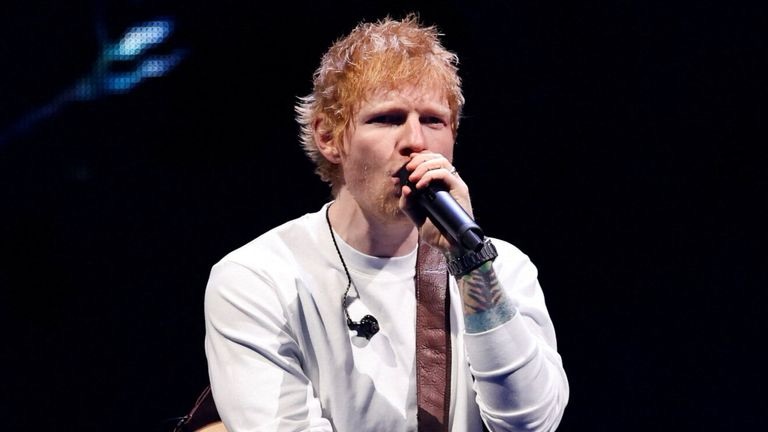
We’ve morphed into a society of cult celebrity worship. Celebrities can be rich and famous for all different reasons, a majority of them being entertainers, and many of them being musicians — or “pop stars.” But worship has always been a part of history, both in religion and monarchy. Now, it seems that the churches and royal palaces have been replaced with Hollywood.
The qualifications for being a successful musician has certainly changed from today verses long ago. You don’t necessarily have to be a “talented musician” in order to make it big. There was once a point in history when you had to really know how to play your instruments, or compose melodies, or raise your voice and hit perfect pitch. Today, we have tools like autotune and fancy editing.
So many current indie artists showcase immense talent — but they simply don’t have the same resources as rich pop stars. And so many pop stars lack musical talent — but they have good looks, money, charm and charisma — something that makes them so admired. They can stand out in uniqueness while also blending in with the trends. They can make mediocracy look so glamorous; they can make fame and fortune look so attainable.
The pop machine makes me question the lost art of music. It’s not to say that I don’t enjoy pop or any kind of mainstream music — I actually love a good chunk of it — some of today’s, and from my childhood, and an era from before I was born. And it’s not to say that all pop stars are talentless — many of them are musically gifted and highly determined people. But it is absolutely corrupted.
We have award shows like the Grammys, where the same ten people seem to win the same ten awards. There’s pop radio that plays the same five songs over and over. And there’s news articles talking about the same few pop stars on repeat. The music industry is a pyramid in which there’s a tiny amount of people who are massively rich and famous, while the majority of striving musicians are scrapping pennies and simply wishing to be heard. It’s not fair because most people at the top are not much different than those at the bottom, they’re just lucky.
There’s a lot of surviving folk songs whose creators remain anonymous because they go back to a time before recorded and written music. The people behind these songs must be immensely talented for their music to survive several centuries. And yet, they’ll never have credit, since we don’t know who they are. Meanwhile, so many pop stars will go down in history — but will it be because their music is so great and timeless, or because they had the resources to shove it in everyone’s faces?
Different music provides different experiences. Today’s pop music can make you feel connected to the people around you because they’re all hearing the same songs as you (whether it’s Spotify or the grocery store.) But folk music can make you feel connected to your ancestors, the generations before you, and the foundation that humanity evolved from (and maybe even a part of yourself from a past life?)
Even when folk music is new, it’s the use of acoustics and instrumentals, the lyrical themes, and the melodic format that embraces that feeling of comfort and tradition. And something about that feels so authentic.
Despite the “popularity” of “pop,” it can actually make you feel disconnected. While it seems like everyone is listening to it, and you want to join in for that sense of connecting, the genre can be so isolating. Pop favors youth, so you naturally tend to feel more disconnected to it with age. But even when you’re a teenager or a young adult, you’re disconnected by other factors — beauty, the perfect body, worship and admiration, excessive attention, charm and charisma, and money. On top of that, social media and paparazzi curate an image that their life is so effortlessly perfect.
Another way that pop music can bring disconnection is how it pushes a wedge between generations. And you can see this as far back as classical verses jazz, or jazz verses rock n roll. On the other side, folk music is designed to fuse generations together and keep traditions going.
Anyway, I’m still not completely hating on pop music. I think that it can make you feel both connected and disconnected. Although, one thing for sure is that the cult celebrity worship needs to end (with everyone, not just pop stars.) If you genuinely like a pop artist, then you should listen to them. But maybe think twice about throwing your money at millionaires and billionaires.
So, has the art of music been lost? I don’t think it’s been completely lost, but many pieces are broken. I think that there’s a lot of greedy artists who don’t want to give anyone else a turn in the spotlight. I think that musical talent is more common than we realize, yet we treat the select few at the top as superheroes and gods. I think a lot of pop is about chasing trends and keeping up with technology. It’s so focused on novelty, yet somehow manages to also be so repetitive.
Then again, I enjoy getting attached to certain artists. I like to watch them grow up, as I feel like we are growing up together. And some of these new artists are actually pretty good. It’s conflicting.
So, I pick up my phone to shuffle through music, and I am overwhelmed with choices. There’s pop music through the decades, from the 50s to today. There’s folk and acoustic, indie, alternative, or bluegrass. Or, there’s heavy metal, classic rock, or punk. There’s classical, Celtic, or fantasy music. And then there’s electronic, dance, house, techno, or dubstep. There’s so many choices… so much music out there… do I want to lean on what I already know or try something totally new?
What if I was transported back in time to nothing but a record player and a handful of vinyls? What if I went back further to a time in which I could only hear music live? What if my main source of music was not my phone, but a bonfire I sit around with my family or my village and sing songs with?
Somewhere between the Stone Age and today, the meaning of music got a little distorted. But at its core, music itself will always be an art, and that can never be lost.





Leave a Reply