
There are many important and powerful goddesses in Greek mythology, a lot of them unmarried and independent such as Artemis. But the common women of Ancient Greece lived by different rules than the female figures they worshipped.
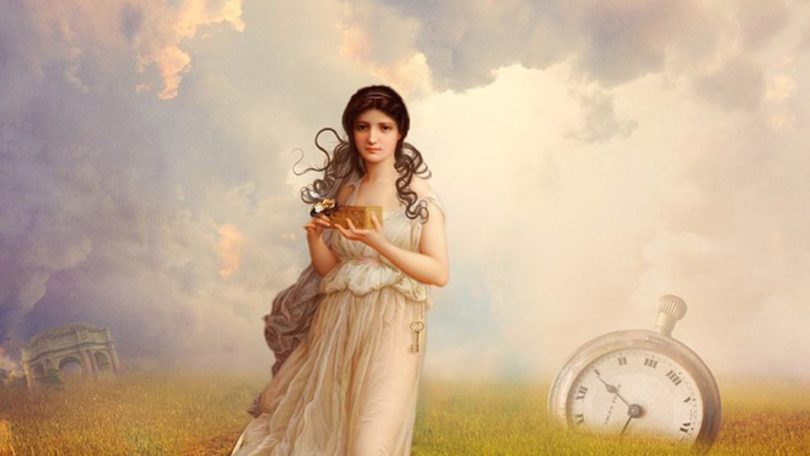
The first woman: Pandora
In Greek mythology, the first woman (as in human, not a deity) is Pandora. Zeus ordered Hephaestus, Athena, Aphrodite, and other gods and goddesses to create the first woman. Before this, only men existed. Zeus deliberated this creation as punishment against mankind. It was retaliation against Prometheus, who had granted men the power of starting fire, but the fire was stolen from the heavens.
And many are familiar with the rest of Pandora’s story. The gods gave her a jar (which was falsely translated as “box” in the 20th century retelling) and ordered her not to open it. Out of curiosity, she ended up opening the jar to take a peak, causing evil and misery to be casted out into the world. But she closed the jar up in time to seal “hope.” This marked the end of the Golden Age, as humankind entered the Silver Age, eventually leading to the Bronze and Iron ages.
The story of Pandora can be compared to the Biblical story of Eve — who is ordered not to eat the forbidden fruit, and then disobeys, thus causing evil to be casted upon the world forever. It is the similar theme of tracing “original sin” back to the first woman — the single ancestor of all women to follow.
Looking at this myth, it can be revealed how Ancient Greek society viewed women. Obviously, they saw a difference between the powerful goddesses verses the human women. Although the Greek version is possibly a bit harsher — in the Bible, woman is created as a companion for the lonely man, but in this version, woman is created with the intent of revenge.
Is that actually the woman’s fault, though? It was Prometheus who triggered Zeus’s rage, it was Zeus who ordered her to be created with ill-intent, and it was both the gods and the goddesses who partook in this event — as well as deliberately tempting Pandora.
Nevertheless, the origin of woman can be seen as a symbol of punishment for men. And maybe not necessarily a “punishment,” but a diminishment of power, after having just granted the ability to make fire. Regardless of her innocence, her curious and easily tempted nature eventually leads to destruction and chaos, the end of peace. At least, that’s what the story shows.

Spartan women in the classical period (4th-5th century BCE)
In Athens, women in Ancient Greece could not vote, own land, or receive inheritance. Evidence is limited, so it is possible that some cities granted women more rights. However, Spartan women had much more rights — and it is said that they “ruled their men.”
It is known for sure that Spartan women trained for battle, drank wine, managed business operations, involved themselves in politics etc. When men left for battle, the women had to take their husband’s place of responsibility with the farmland and businesses. (Interestingly, history seems to have a connection between war and women’s rights — as WWI and WWII granted a surge in women’s rights in the USA, as women were required to take on more responsibility with men leaving for war.)
Spartan girls were very physically active, partaking in sports as much as the boys. They also received extensive education during their school years. However, they were homeschooled while the boys attended public school.
Same-sex relations were common among both men and women. There were no terms for “heterosexual” or “homosexual” at that time. Instead, it was somehow both accepted (possibly even assumed) while simultaneously unacknowledged. Yet ultimately, man and woman were expected to marry and have children. Compared to Athenians who married at 13 or 14, Spartan women typically waited until 18-20 to marry, after finishing their formal education.
The Spartan marriage ritual is quite fascinating. On the night of her wedding, the husband-to-be would perform a kidnapping and lock her away in their new home. She would stay there with other females, who would shave her head and dress her in boy’s clothing. Later in the night, the man would come and surprise her and the two of them would make love. Then he would leave and return back to his home.
The “helots” were those considered low-class, yet above slaves. The helots did all of the weaving, cleaning, and nannying — allowing Spartan women to take care of their husband’s duties while they were away at war. The helots even took care of the breastfeeding.
Spartan women were extremely tough and valued violence just as strongly as the Spartan men. They took great pride in sending their sons off to war. It is even said that they preferred for their sons to die bravely in battle rather than refuse to fight…

Athenian women in the classical period (4th-5th century BCE)
In contrast, Athenian women had essentially no legal rights. They belonged to their husband or father. And if their father passed away, inheritance would go to their brothers; and if they didn’t have any brothers, then their husband.
Girls received primary education, including athletic training. There was an emphasis on reading and literature. Although, many married at very young ages and were expected to have children right away. There was no place in Athenian society for an older, single woman.
After marriage, they were expected to stay home at almost all times. The only men they were allowed to socialize with were their family members. They definitely could not engage in politics — forbidden from running for office or even voting. When a woman did leave her house, which was not often, she was expected to be completely covered up — including her hair and neck, along with the rest of her body.
A woman was expected to remain hidden in the background — no one should know her, see her, or hear about her. It was considered a bad thing for people to talk about a woman — even if it was all positive comments. For anyone to gossip about a woman at all, for better or worse, meant disrespect to her character.
In wealthy households, slaves performed many household duties such as cleaning and childbearing. Some slaves worked in shops, bakeries, and other businesses. Sex workers were common and divided into two groups: the lower-class and higher-class. Oddly enough, with more money came less freedom for a woman — as slaves and sex workers ironically lived less confined lives in many aspects.

Archaic period (800-480 BCE)
Going backwards a bit further, Greek women had more rights and citizenship. Even when it came to their clothes, women had more freedom. In the Archaic period, they wore sleeveless dresses that revealed cleavage, with a firmly-fitting dress or skirt that reached their ankles. In contrast, women of the Classical period had to be covered from head to toe while out in public. And their clothing was baggy and shapeless.
Unfortunately, there is little evidence remaining of the Archaic period verses the Classical, especially regarding women. But from limited sources available, it does seem like they had more freedom and power during this time. The very end of the Archaic period, along with the Classical, would establish strict roles for women that would follow for many, many centuries to come.
This is the period in which Greek myths were first recorded, that we know of, in 700 BCE. Before this, mythology was solely an oral tradition. This is also the time in which statues of goddesses were built — in which we see depictions of them in short-cut and tight-fitting clothes, some of them completely nude. This reveals ancient perception of a womanly body: that it was adored, not intended to be shamed or hidden. Of course, they saw a great distinction between goddess and human.

Religious life, High Priestesses, and Goddesses
Along with men, the women of Ancient Greece partook in religious festivals that were dedicated to specific gods or goddesses. Certain festivals were received for women only, while others included both. The women-only festivities embraced the power of procreation and female reproductive organs.
A notable ritual for young girls was the dedication to Artemis, the huntress. Between ages five and twelve, the girls would act out as “little bears,” who were wild beasts and would grow up to be domesticated as a wife and mother someday.
Women had more power in religion. There were many high priestesses of religious orders. High priestesses were favored to be unmarried or post-menopausal. This is a radical comparison to the late medieval era that only allowed men to have a place of power and leadership in religion. Even in present day, many religions do not allow female priests. And in the ancient world, spirituality was the most important aspect of life, making them highly influential.
In religious cults, goddesses played just as much importance as gods. Many cults were strictly devoted to one, single goddess, who’s importance was seen as higher than any other god. One of today’s most commonly known goddess is Artemis, the hunter. She is a virgin goddess — the term “virgin” in ancient times did not mean an abstinence from sex, but rather a woman who is not married or attached to a man.
In Abrahamic religions, there are no female holy figures equivalent to males. Although in the Catholicism, there are female saints, as well as the worship of Holy Mary. While the Ancient Greek girls grew up conditioned to become mothers and wives, they still had powerful female figures to look up to, along with the option of taking a leadership role in a religious cult.
Birth control: herbs and fruits
Birth control was prominent in the ancient world — not just a recent phenomenon. Not just prostitutes, but also unmarried and married women alike favored birth control as a way of avoiding financial stress and the dangers of pregnancy and childbirth.
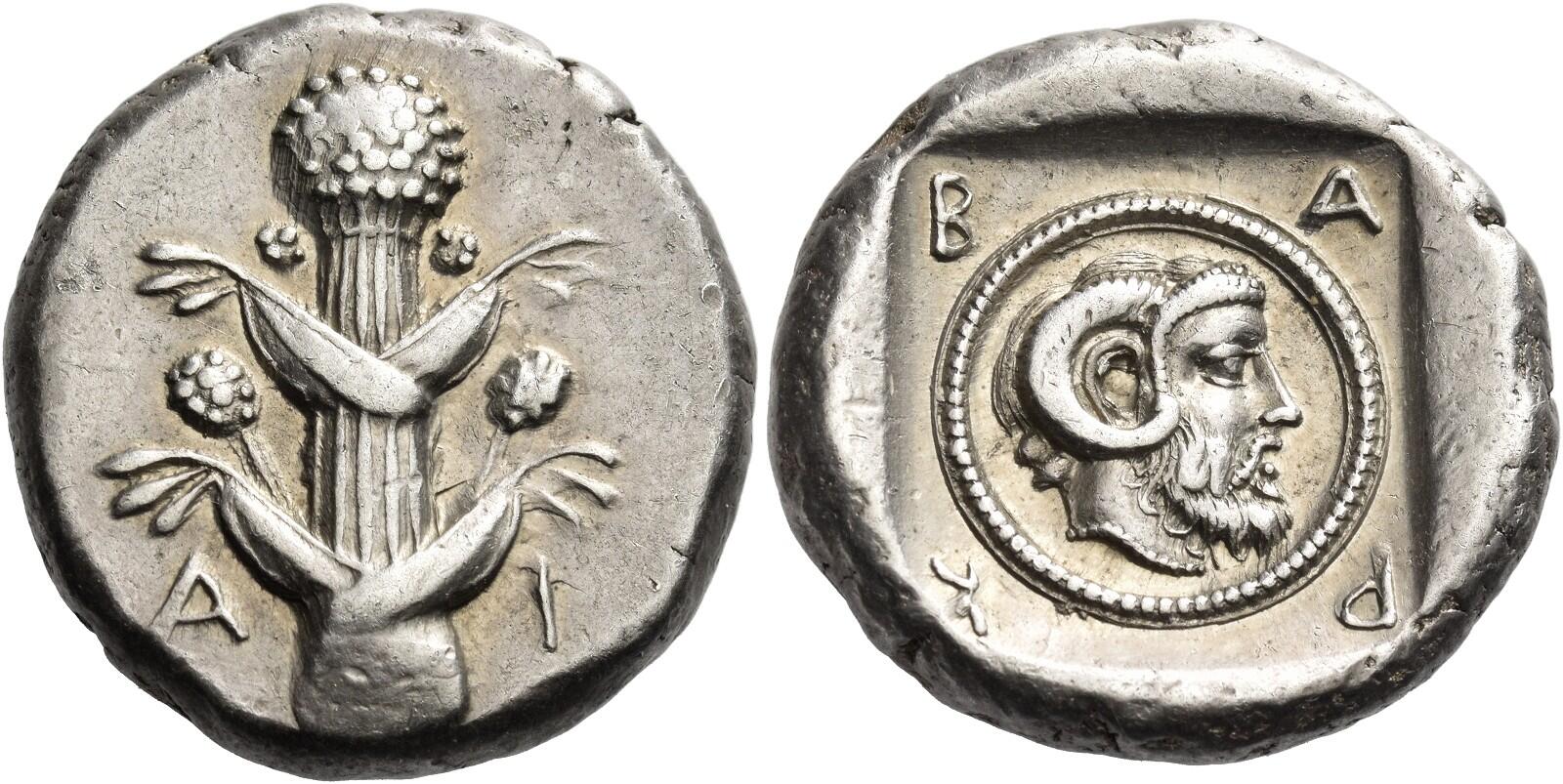
Many herbs were used as birth control — it is likely that several of these herbs have become extinct because they were so popularly used. Silphium, a fennel-like plant, was often used as a contraceptive method. These heart-shaped seeds were extracted into a juice and drank once a month. Sometimes they were planted directly into vaginas. This plant was so popular that the Cyrenians put an image of it on their currency. The plant went extinct between the 1st and 2nd centuries CE.
A close relative of Silphium was used in an 1985 study to test its contraceptive powers. Through oral administration, it was proved to prevent pregnancy in rats, but ineffective in hamsters at the same dosage.
An olive oil blend used on the vagina was said to slow the mobility of sperm. This blend also included honey, cedar resin, balsam tree juice, and sometimes white lead. Another popular spermicide was made from fresh pomegranate peels. High doses of vitamin C was another solution, everything from consuming plenty of oranges to sticking a branch of parsley up one’s vagina.
Many ancient women also turned to abortion methods if their birth control failed. Herbs such as pennyroyal, Angelica, and cohosh were used to trigger a miscarriage. Invasive procedures were also commonly done by doctors.

Suppression or empowerment?
“The male is by nature superior and the female inferior…the one rules and the other is ruled.”
Aristotle
Men were believed to have more in common with the gods, while women were more closely related to the animal kingdom. It is said that women lacked self-control, discipline, and morality in comparison to men.
It is interesting to hear people ask, “why should the woman cover herself up, when the man is the one who cannot handle controlling himself?” But the opposite was thought to be true back then — that the woman needed to be contained because she lacked the ability to contain herself. The woman was like the pet, the wild dog, who needed to be locked in a crate and walked on a leash in order to prevent chaos.
Modern, western perception of man and woman has completely flipped. Of course, sexism still prevails, and most men do not see women as equals, or worthy of power and rulership. But since possibly the Modern age (post-14th century) the script says that men are the dogs, and women are the more spiritual ones.
It’s very sad that we do not know how Ancient Greek women truly felt about their role in society. The only surviving texts come from men, who have a tendency of speaking for women from their own, biased assumptions. Did all of them feel suppressed and await the day that change would come? Or did some, if not most, of them find satisfaction in their place?
We do have many current-day societies in the Eastern world of women who exist in similar structures. We also have current-day Western women who continue practicing patriarchal religions, despite living in a country of religious freedom. Many of these women who would be considered “suppressed” will argue that they are happy with their gender roles, submission, and covering themselves up from head to toe. Freedom is relative, as one woman feels empowered by posting pictures of herself online in a bikini, while another woman feels just as empowered wearing a fully-covered dress and a headscarf.
In conclusion
Overall, Ancient Women of Greece certainly had far less rights than modern-day, Western society women. And their role in society was very clearly defined. But in some ways, they had more freedom and power than women of the medieval era, even women of the 17th and 18th centuries. It could be argued that they had more rights than many modern-day Eastern society women have, even more rights than modern-day Western religious communities.
The autonomy of woman is not merely as simple as an upward slope. In Archaic Greece, women had more rights than they did in the following centuries of the Classical period. And in the centuries to follow, women would lose their power in religion. Freedom also varied by location, as the Spartan women had far more rights than Athenians. And today, women have different rules and expectations depending on which part of the world they live in. Today in the USA, we have Wiccans who worship the Triple Goddess, and Christians who say Jesus is King and belong to churches who do not allow women to become priests. So, you cannot look back in time and say “women had less rights back then; women have more rights today,” it’s not that simple.
How does it make you feel, as a woman, to entertain the thought of being created for the purpose of disempowering men? Does it make you offended, or does it make you giggle?
Sources:
- https://www.worldhistory.org/article/927/women-in-ancient-greece/
- https://www.worldhistory.org/article/123/spartan-women/
- https://www.colorado.edu/classics/2018/06/18/womens-dress-archaic-greece-peplos-chiton-and-himation
- https://www.history.com/topics/ancient-history/greek-mythology
- https://www.metmuseum.org/toah/hd/wmna/hd_wmna.htm
- https://www.mentalfloss.com/article/83685/9-forms-birth-control-used-ancient-world
- https://pubmed.ncbi.nlm.nih.gov/12807304/
- https://www.historymuseum.ca/cmc/exhibitions/civil/greece/gr1100e.html









 Crystal Aura Gaze

Leave a reply to Ravyn Arkakis Cancel reply