
I recently saw an argument claiming that Paganism began as a barbaric and immoral religion, and that Christianity is the reason for why society now has good morals.
First off, this is no attack on Christianity whatsoever. All that I am doing is defending Paganism. Yes, modern reconstruction of Paganism (AKA Neo-Paganism) is very different than Paganism in ancient times (in which they did not even use the term “pagan,” until Christianity came along as a way of differentiating themselves.)
Just because Neo-Paganism can never fully recreate the true ancient religions, does not mean that Paganism began as this barbaric and immoral way of living. To make this claim is completely wrong and uneducated. Sadly, I feel like much of the world sees the ancient religions as this way.
Misconception of “human sacrifices”
The argument that was made was because of “human sacrifices” that were claimed to happen because of Paganism. This is such a misconception – to say that all ancient religions conducted human sacrifices, or that they needed to m*rder in order to please the gods.
“Human sacrifices” were never a part of true Paganism. Most accounts of human sacrifices come from myths – which cannot (and should not) be taken literally. Any true account of a human sacrifice, in rare cases, came from corrupted authority figures who used their powers for evil. It had nothing to do with the heart of the religion.
Paganism put an END to m*rder
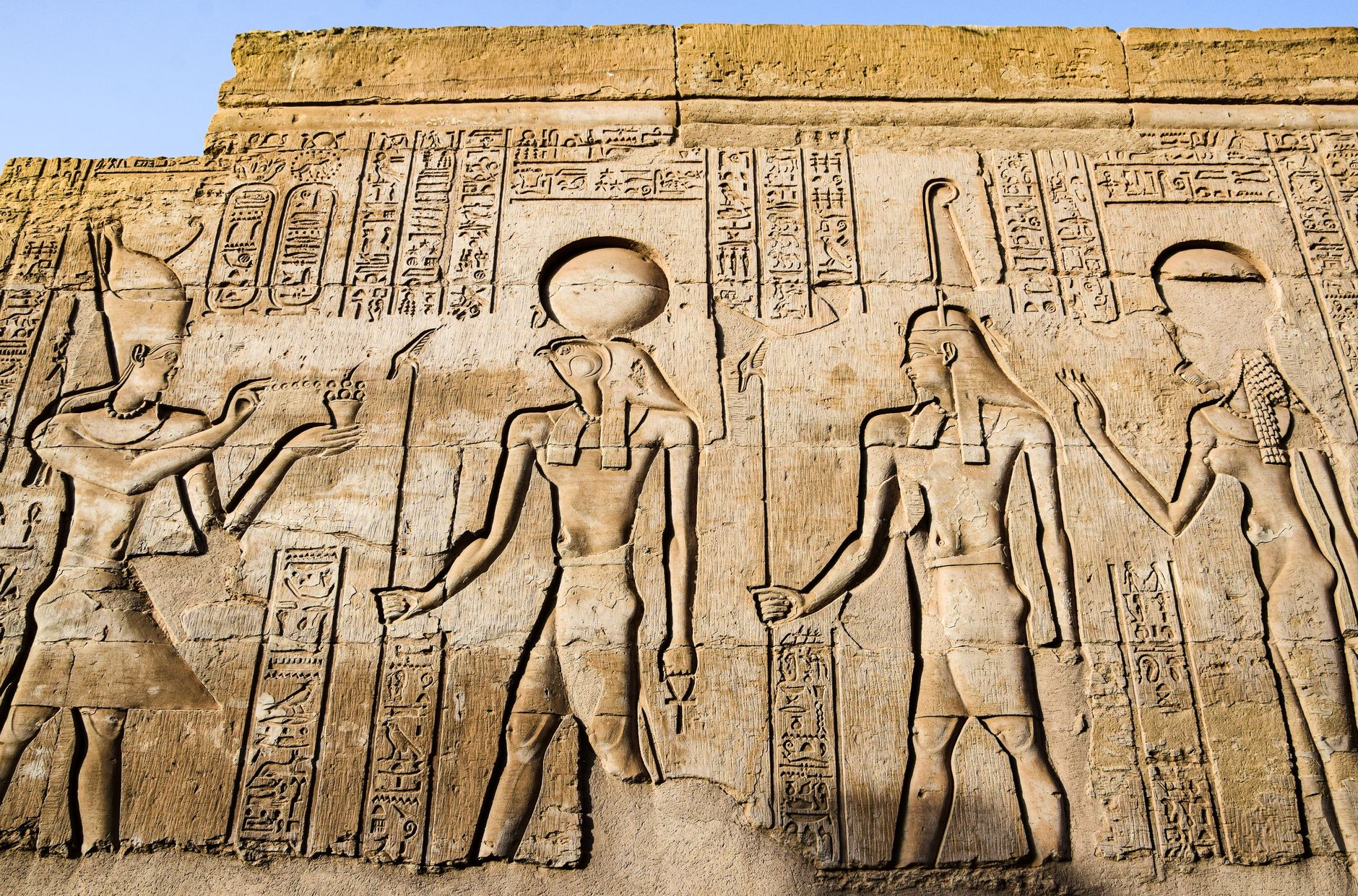
Actually, I will take this argument a step further and state that Paganism put an end to human sacrifices and m*rder. In the ancient Egyptian religion, it was believed that Isis and Osiris (goddess and god of Egypt) put an end to cannibalism.
Through the introduction of agriculture and the discovery of grain, Isis and Osiris taught the people how to grow and farm their own food from the land. When food supply became steady and reliable, humans no longer had to m*rder one another for survival.
Isis and Osiris went on to teach the people about civilization – how to weave cloth, how to use medicine, and how to function as a peaceful society. And so, Paganism was never barbaric – it actually transformed human life from savagery to civility.
The ethics of “animal sacrifices”
Ancient religions had a practice of “animal sacrifices,” although this was still not a core part of every single religion, but this would be much more likely to actually take place than an actual “human sacrifice.”
When people think of animal sacrifices in terms of paganism, they imagine animal cruelty and pain infliction done in vain. However, these “animal sacrifices” were extremely humane in comparison to modern day factory farming.
Animal sacrifices were done with great respect to nature, the land, and the animals themselves. Animals were honored with dignity – not shoved into slaughterhouses like they are today. Ancient people used ALL parts of animals – not just the meat, but their wool and fur, their bones, and so forth – for food, clothing, tools, and more.
I am vegetarian because I disagree with the horrific practices of today’s modern factory farming and animal mistreatment. We also live in an age with access to food alternatives that the ancients didn’t have. And so, their animal sacrifices were far more ethical than today’s animal slaughtering. It is hypocritical for a modern person to label “pagan animal sacrifices” as barbaric and unethical.

Violence and corruption in Christianity
Again, I am not bashing Christianity at all, because I agree that there are many ethical points to the religion. The teachings of Jesus are inspirational and something that we should aspire towards. But to claim that Christianity is the reason for the end of violence and bad morals is a false statement.
Christianity took many lives, caused many wars, and spread a lot of violence through forced conversion. The Christians even attacked their own people – such as the Catholics who m*rdered the Cathars – both Christian groups.
And how can we forget the witch trials, including the most deadly one of all, the Salem Witch Trials. Think of how many innocent people, mainly women, who were prosecuted and stoned to death in the name of Christianity.
In modern times, there is ongoing corruption within Christian churches, especially when it comes to sexual abuse. Very sadly, this is happening every day.
Double edged sword of all religions
On the opposite spectrum – Christianity has surely saved many lives. Many volunteer programs, rehabilitation work, donations and good deeds are owed to the religion. It has saved many lives, but also ended many lives… so to make a black-and-white statement that it ended all violence and corruption is wrong.
Just as there is both a light side and dark side to Christianity, the same goes for Paganism and all ancient religions. Of course, there have been pagan wars in ancient history. And with any kind of group or society, there will always be a chance of power abuse – the sad reality of human nature.
Every single religion has the potential to be used for evil. It’s true that witchcraft, like any religious ritual, can be used with negative intentions. Members, leaders, and groups of Paganism can take advantage of the religion and use it in evil ways – not because of the religion itself, but because of their bad character.
Paganism, Christianity, and every single religion can be used in a negative context for abuse of power. But the true core of Paganism was never intended for that.

Positive morals of Paganism
Most people are uneducated on the positive morals of Paganism – not just modern Neo-Paganism, but the ancient religions during their time.
We can find a clear example of positive morals in the Ancient Egyptian religion in their belief of the afterlife. It is said that once you die, you are “judged” (similar to Christianity’s entrance to Heaven or Hell). Your heart is placed on a scale against a feather – your heart must be as light as a feather. A heavy heart denotes a person full of vengeance, resentment, bitterness, and evil. A heart as light as a feather is full of forgiveness, acceptance, and goodness.
The Ancient Egyptian religion has a list of “42 Laws of Ma’at” – also known as “Negative Confessions” or “Declarations of Innocence.” They are similar to the Abrahamic “12 Commandments.”
- I have not committed sin.
- I have not committed robbery with violence.
- I have not stolen.
- I have not slain men or women.
- I have not stolen grain.
- I have not taken offerings from the gods.
- I have not stolen the property of the gods.
- I have not told lies.
- I have not carried away food.
- I have not uttered curses.
- I have not committed adultery.
- I have not caused anyone to weep.
And so forth…
These laws are taken from the Egyptian Book of Dead. It is historical proof that the ancient people took morality seriously and that their religion encouraged kindness, justice, selflessness, peace, and good deeds.
Principles like these can be found in historical records through plenty of other ancient religions (Paganism), such as Greek and Roman. These values connect to knowing yourself, respecting your elders, practicing minimalism, avoiding overindulgence, and treating others fairly.
The ancients used religion as a moral compass. On top of that, they generally respected another’s right to worship a different god or goddess, or a different culture entirely. In fact, the Egyptians, Greeks, and Romans ended up blending many of their gods because their religion was more focused on the message rather than “which god is the correct god.”

Ending the negative stereotype of Paganism
One more time, I will stress that this is not an attack against Christianity or any other religion. This is not even saying that Paganism is the highest moral religion.
Most modern people look at Paganism as a barbaric and unethical religion. There are still many people who believe that the modern practice of Neo-Paganism is evil, too. In reality, true Paganism in both the ancient and modern context is not a savage practice.
Paganism may be about the gods, but underneath the myths, the worship, and the offerings, is a core belief system built on respect and kindness. “Human sacrifices” of paganism are a misconception, mainly built on stories with zero historical proof, or corrupted authority figures who are inherently evil and used the religion as a mask. “Animal sacrifices” that took place were done with sacred reverence for animals, which is absent in modern day factory farming.
Paganism, nearly every ancient religion, was built on the foundation of being a good person and causing no harm to others. So, it is devastating to see the religion being casted as the reason for violence, abuse, and evilness. This claim is nothing but propaganda, stereotypes, and ignorance.
Can we genuinely say that Christianity put an end to bad morals? Is modern society now completely devoid of evil? Was the rise of Christianity not also coupled with war and m*rder?
Go beyond the media’s falsely negative portrayal of Paganism. Look at the historical records connected to pagan religions. Educate yourself and tell me that it was ever a barbaric and immoral religion.








Leave a Reply