Have you ever considered making honey your entire personality?
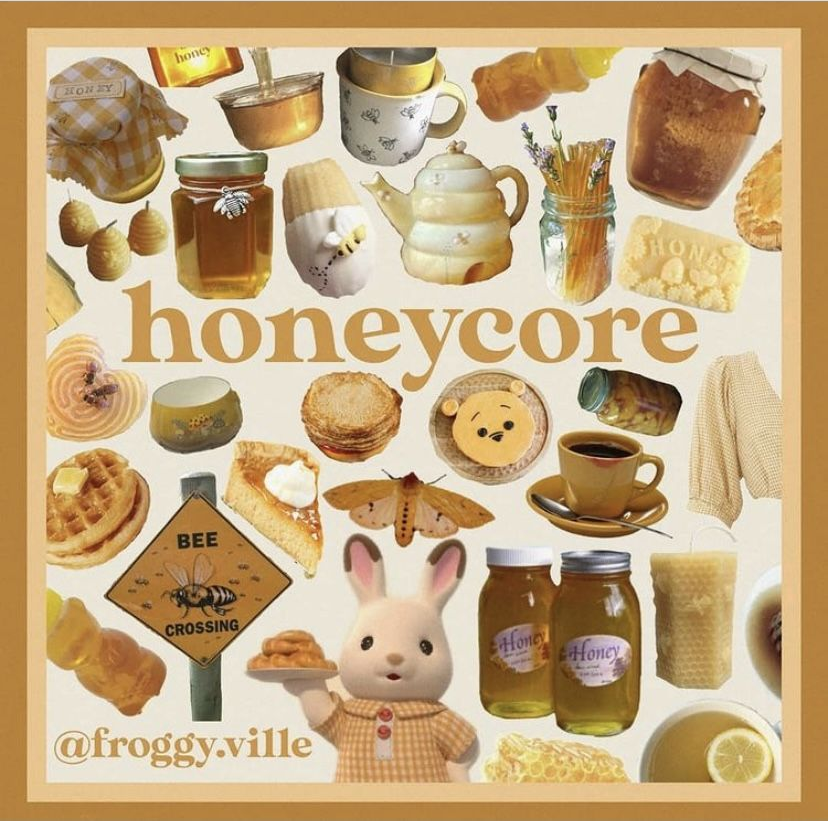
Honeycore is an aesthetic that’s associated with golden-yellow tones, cottage living, sunny days, buzzing bees, and of course, honey. But honeycore is actually so much more than an aesthetic — it’s a way of living. When you live by honey, you can find so much more sweetness in your life.
A practical choice
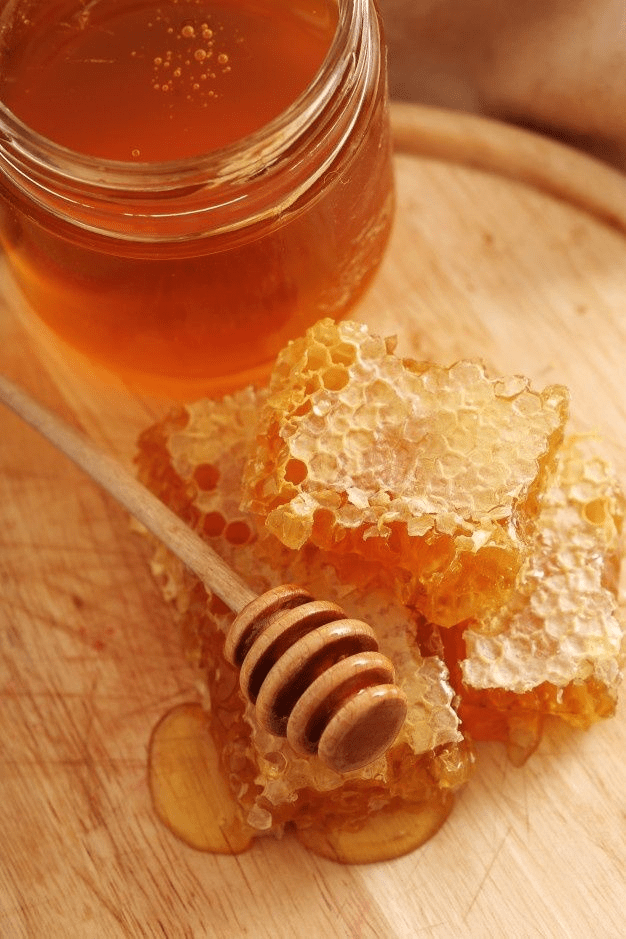
First, you should understand the health benefits of honey.
- Antibacterial & antimicrobial: honey contains hydrogen peroxide and has a low pH, which is an ideal environment for fighting bacteria. Honey can heal both external wounds and internal infections. And this also gives it an infinite shelf life, as you never have to worry about it going bad!
- High antioxidants: honey contains flavonoids and polyphenols which protect your cells from oxidative stress, reduce inflammation, and support brain and heart health. Antioxidants are also known to slow down signs of aging.
- Natural cough medicine: Studies have proved honey to be more effective than over-the-counter cough medicine. You can also rely on honey as a preventative for throat soreness during flu season.
- Digestive support: Honey improves gut health due to its prebiotic properties, nourishing the good bacteria. It’s also known to sooth gastritis and ulcers.
- Energy boost: The glucose + fructose provides a quick burst of energy in alternative to caffeine.
- Skin health: Honey may be used topically to speed up the healing up cuts and burns, treat acne, or hydrate dried skin.
- Allergy relief: Using local raw honey may cure allergy symptoms due to the micro exposure of local pollen.
Caution:
- Never give honey to a baby that is younger than 1-years old.
- Honey is vegetarian, but it is not vegan. It is considered an animal by-product because it is produced by bees.
- Honey is high in sugar, so be aware of your sugar consumption. A little bit of honey goes a long way! You may want to reduce your intake of added sugars from other foods, so that you can get your portion from the best source!
And while we’re still on the topic of health, before we dive further into the magic of honey, let’s compare it to the lesser sugars.
Honey vs. other sugars
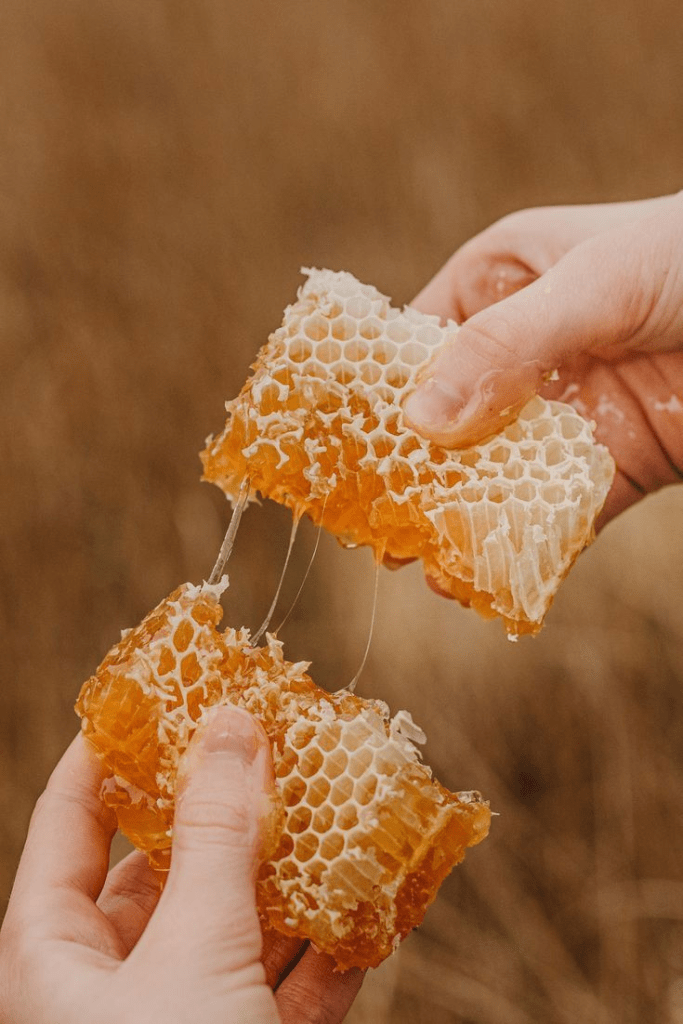
In comparison to other sweeteners, honey is the best choice.
Cane sugar (white sugar)
Honey begins as nectar from flowers, transformed by bees, and then harvested by beekeepers. Meanwhile, cane sugar is extracted from sugarcane or sugar beets, undergoing boiling, crystalizing, and refinement before reaching the final product.
Cane sugar is made up of 100% sucrose, which means it does not contain any trace vitamins, minerals, or enzymes as opposed to honey. This gives cane sugar absolutely zero nutritional value.
Alongside, cane sugar has a higher glycemic index (GI), meaning it spikes blood sugar faster. Cane sugar GI tends to be ~65 or more, while honey GI tends to be on the lower side, between ~35 and 60.
The sticky and syrupy consistency of honey also makes it superior to cane sugar. The versatility allows for spreads, dips, drizzles, and sauces. It can change the entire texture of a simple recipe.
High fructose corn syrup
Another common sweetener is high fructose corn syrup (HFCS.) Ultra-processed, much more so than cane sugar, it requires a chemical mechanism of adding enzymes to convert some glucose to fructose.
HFCS can be found in our sodas, juices, candy, and baked goods. It’s also found in unexpected foods, such as condiments, breads, and savory snacks.
Similar to cane sugar (or white sugar), HFCS has zero nutritional value. It’s said that both sugars are equally bad for our health. HFCS is more processed, in which some may argue that it’s worse than cane sugar, but that is debatable.
Honeycore approved sugars
When you can’t get your hands on honey, you can also opt for other natural sweeteners:
- Maple syrup – contains antioxidants and minerals, lower GI, bold flavor.
- Molasses – the byproduct of refining sugarcane; contains nutrients.
- Coconut sugar – contains trace minerals and a prebiotic, lower GI.
- Agave cactus syrup – very strong sweetness therefore requires less use, lower GI.
The takeaway on sugar
Too much of anything is bad for you — and too much sugar is certainly bad for you. But that should not be a reason to stay away from honey. Sugar itself is not an evil, in fact, your body naturally craves sugar because it is designed to function on it. You should be conscious of sugar, but do not deprive yourself of it.
As you incorporate more honey into your life, you may use this as an opportunity to remove excess sugar from other parts of your life. There’s a lot of hidden sugar in unexpected foods — pay attention to nutrition labels, ingredients, etc. Be conscious when you’re grocery shopping, ordering takeout, or eating at a restaurant.
Rather than limiting your sugar or consuming too much sugar, think of it as trading lower quality treats for something more rich. Also, a little bit of honey goes a long way.
Philosophy of honey
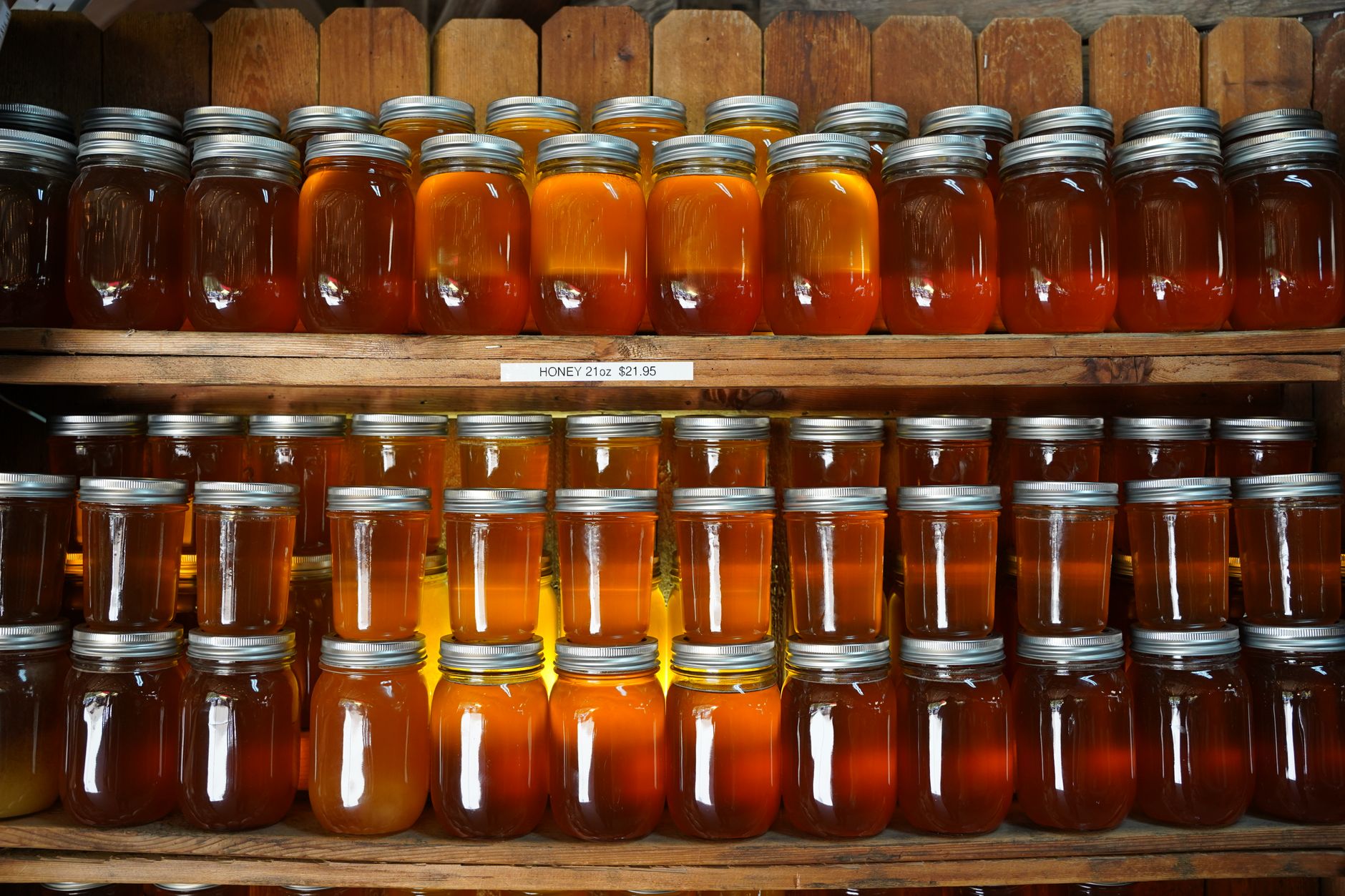
Beyond health and practicality, honey is also a philosophy of living. Just look at the characteristics of honey:
Sweetness
In a world that can feel so dark and cold, honey brings that sweet comfort that we crave. We can bring sweetness in our actions, our words, and the way we present ourselves. When you embrace honey, you’re embracing the way of making life a little sweeter.
Warmth
The golden glow of honey brings the satisfaction of a sunset on a summer day. Golden tones, including soft yellows and neutral browns, make us feel both uplifted and calm. Simply, the color of honey brings more comfort into our lives.
Slowness
Moving slowly in the world, we appreciate each moment instead of rushing to get to the next. We aren’t in competition with anyone else, we aren’t anxious or restless; we move at our own, steady pace. Honey moves slowly out of its jar – sometimes it gets stuck. It encourages us to have patience and slow down.
Soothing
Honey is a medicinal sweet treat. Taking care of yourself doesn’t have to be a chore. Honey reminds us that self-care can feel pleasurable. It soothes our throats, our stomachs, our tastebuds, and our sugar cravings.
Connection to nature
Honey comes straight from the bees. Actually, the source of honey is flowers. Raw honey is an unprocessed food. Honey gives us connection to the flowers, the bees, and nature as a whole. It makes us feel thankful for our planet.
Bible quotes on honey
1. Psalm 119:103 (NIV)
“How sweet are your words to my taste, sweeter than honey to my mouth!”
2. Proverbs 16:24 (ESV)
“Gracious words are like a honeycomb, sweetness to the soul and health to the body.”
3. Proverbs 24:13-14 (NIV)
“Eat honey, my son, for it is good; honey from the comb is sweet to your taste. Know also that wisdom is like honey for you: If you find it, there is a future hope for you, and your hope will not be cut off.”
4. Exodus 3:8 (NIV)
“So I have come down to rescue them… to a land flowing with milk and honey…”
5. Ezekiel 3:3 (NIV)
“Then he said to me, ‘Son of man, eat this scroll I am giving you and fill your stomach with it.’ So I ate it, and it tasted as sweet as honey in my mouth.”
Simple foods and recipes
- Peanut butter and honey sandwich
- Yogurt and honey
- Toast with butter and honey
- Tea and honey
- Warm milk with spices and honey
- Honey mustard dressing
- Baked honey apples
- Honey pancakes
- Honey overnight oats
- Honey banana smoothie
- Honey ice cream
- Honey roasted chickpeas
- Honey glazed sweet potatoes
- Honey almond protein bars
- Honey roasted pumpkin seeds
- Honey glazed carrots
- Honey soy stir-fry
- Garlic honey spread
- Whipped honey butter
- Hot honey
Honey in fashion
Honey goes beyond the kitchen. Honeycore is expressed in fashion, style, and outfits.
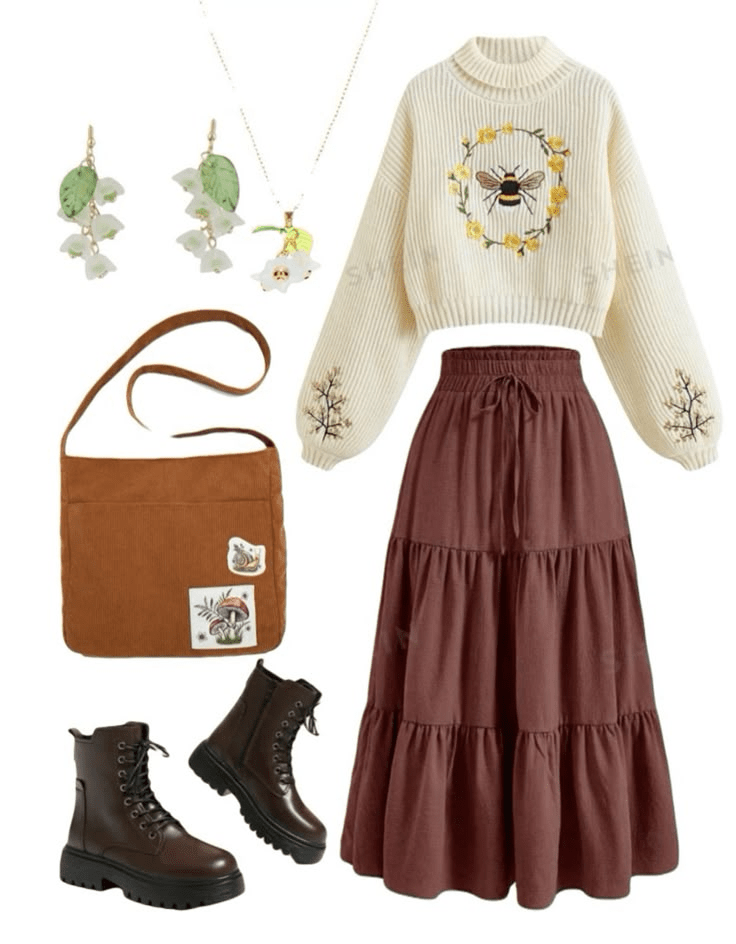
In fashion, look for golden tones, including yellow, brown, black, beige, cream, and orange. Tones should be soft and warm – with some black or dark brown contrast. Any shade of green is also encouraged, representing nature and plants.
If you dye your hair, you may want to consider golden tones such as dark blonde, light brown, or chestnut brown. You could also use lemon juice to bring out natural highlights in your hair. However, embracing your natural hair color, no matter the color, is still very honeycore.
Women may want to dress in flowy skirts and sundresses for an elegant yet relaxed look. Sweaters and cardigans are perfect. Headbands and bandanas are also great. Look for floral prints, anything with flowers, and of course – anything with bees! Think “cottagecore” fashion style.
Choosing the right honey
As a honey enthusiast, you want to make sure that you are buying and consuming the right kind of honey. Most people use honey which is highly processed. There’s an overload of “fake honey” out there – sugary syrups disgusted as true honey. Simply look at the ingredients list and be sure that “honey” is listed on the label.
You should be weary of honey at your chain grocery store. Most town faire’s and festivals will have at least one tent set up of local honey sellers – these are much more trustworthy than your grocery store. Look around for local shops in town or online. Anything local and independent will be much more trustworthy.
There are many kinds of honey, most commonly clover, wildflower, and buckwheat. Clover is light and mild, wildflower is dependent on seasonal flowers and has a bold and floral taste, and buckwheat dark, strong, and earthy.
Honey never expires – but some people are alarmed when they see that their jar of honey has crystalized. This is nothing to worry about, in fact, it’s a very assuring sign that your honey is raw and natural. Highly processed honey will not crystalize.
Crystalized honey is completely natural, safe, and reassuring. Some people prefer the texture. If you do not like your honey crystalized, you can add a little bit of warm water to your serving of honey. Do not boil or microwave honey – as this destroys the nutrients.









Leave a comment